
Malheur NWR Field Trip Report
By Ted Smith and George Sayler
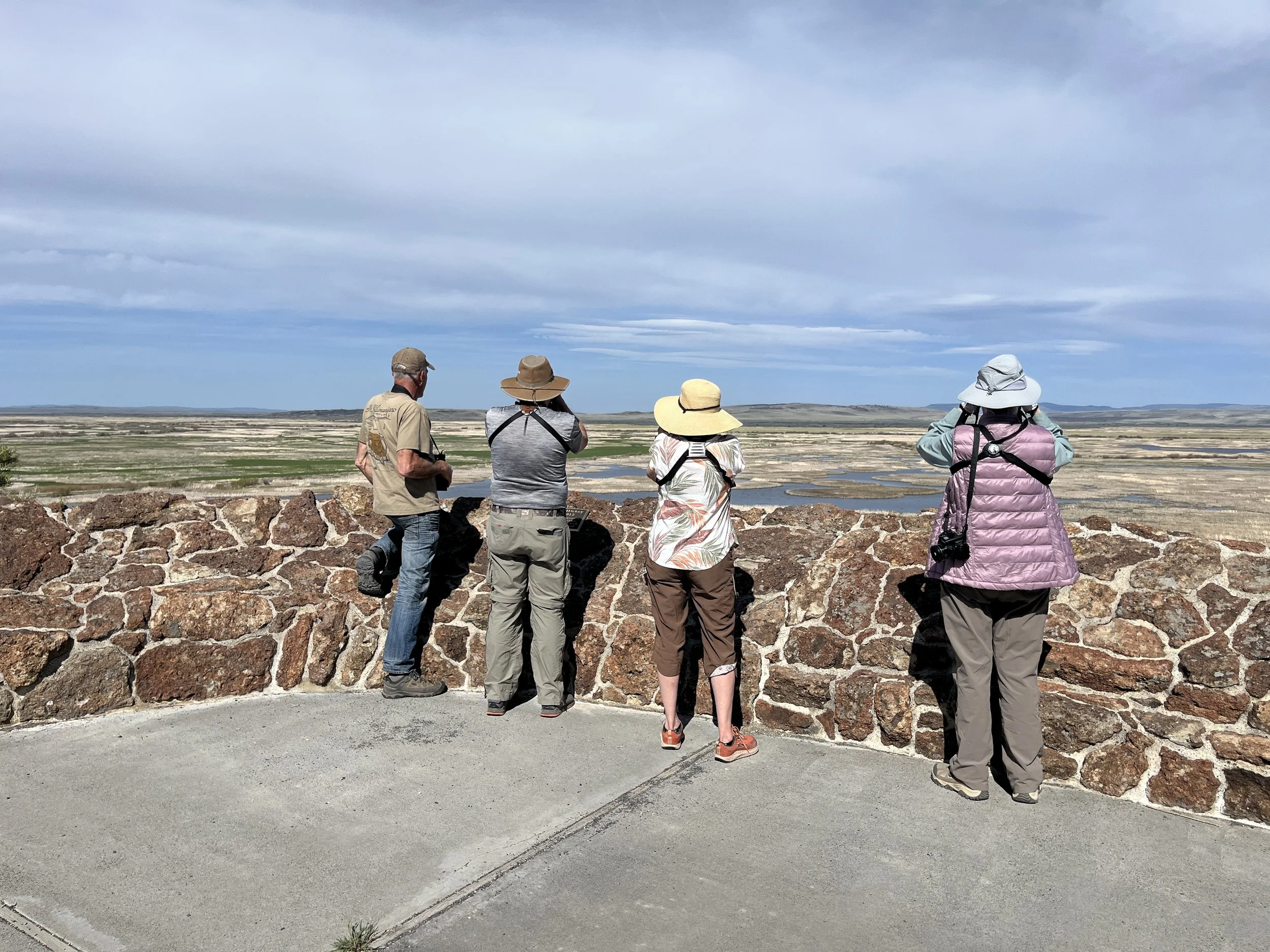
Anticipation was high leading up to our May 2026 trip and it did not disappoint. It is a long drive from Coeur d’Alene, Idaho to Frenchglen, Oregon. One of our members arrived on Monday the 4th to check things out before the rest of us rolled in. Two groups split the drive by stopping overnight on Tuesday night in Kennewick or Walla Walla. Others bit the bullet and did the long trip in one day. The drive down highway 395 through eastern Oregon is spectacular and the scenery varied from rolling wheat fields to pine/fir forests. Two of our group ended up staying in Burns, Oregon because there was not enough room at the Frenchglen Hotel to accommodate them. The rest of us stayed at the historic hotel, built in 1923, and its nearby motel units.
Mark and Marie had already had one or two days of birding when we got there on Wednesday afternoon and reported lots of interesting sightings which got us all pumped for two full days of the best Malheur had to offer.
The first day we drove north to the refuge headquarters and visitor center. Over 65 species had been sighted from that location in the previous 14 days. It turned out to be a just amazing stop. Warblers and Vireos were flitting about in the Chinese Elms while waterfowl and waders popped up in the nearby slough. The feeders were constantly busy with birds and two different species of ground squirrels. Townsend’s Warblers, Yellow-rumped Warblers, Northern Yellow Warblers, Orange-crowned Warblers, Cassin’s Vireos and Western Warbling Vireo were easily seen by all. Then the Western Tanagers arrived along with a couple of Bullock’s Orioles and Lazuli Buntings. The place was alive with eye candy. Several people commented that it would be easy to bring a lawn chair and just sit back for the day and watch the parade of new arrivals.
A quick side trip out of the headquarters area yielded a very cooperative Burrowing Owl.
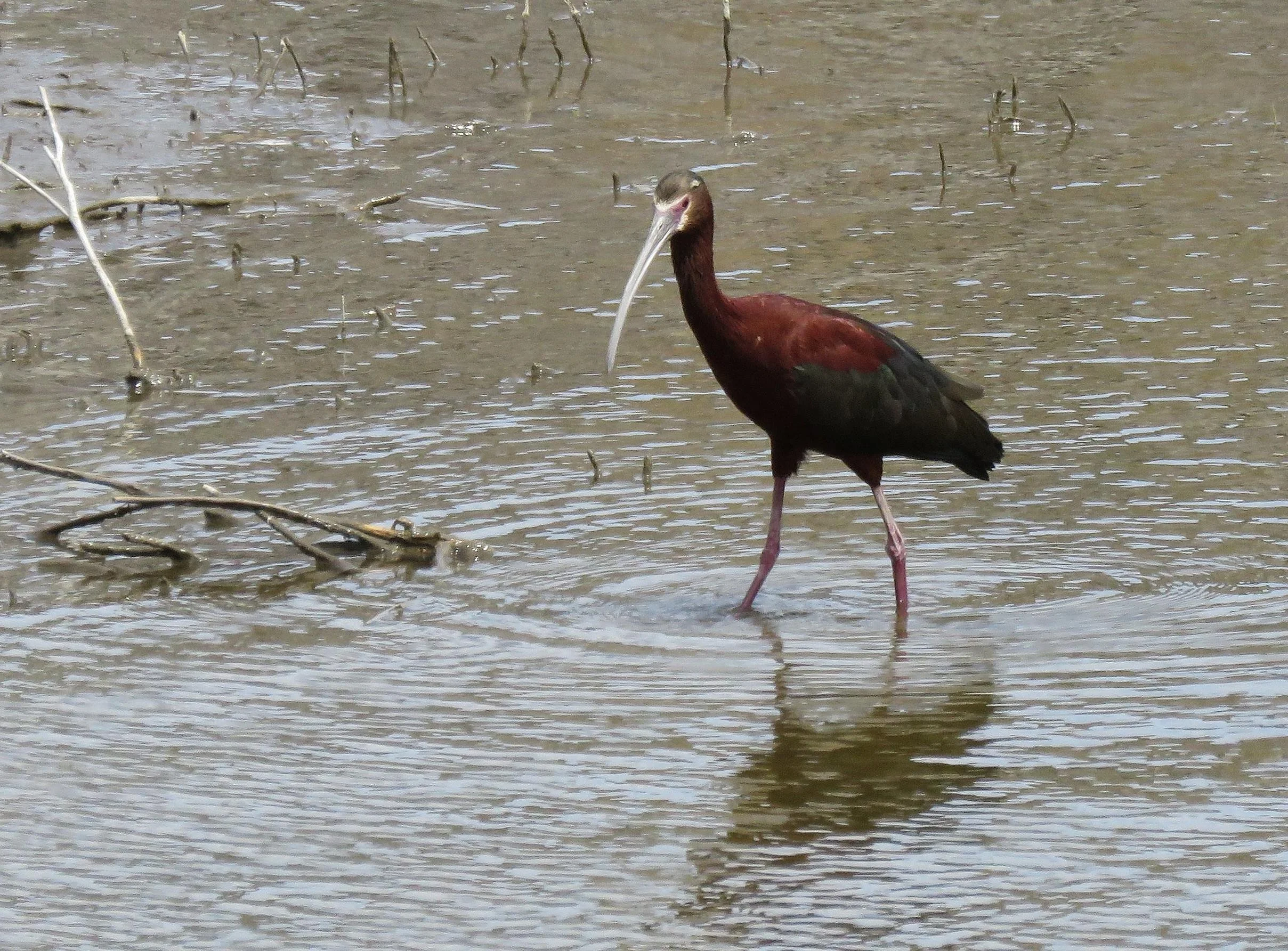
Our next stop was at the “Narrows” where Harney and Malheur Lakes meet. This was a good spot for waterfowl, grebes and waders. We were able to scope White-faced Ibis that were only 40 yards away as well as a Black-crowned Night Heron and Clark’s, Western, and Eared Grebes. Black-necked Stilts and American Avocets as well as Franklin’s Gulls and White Pelicans were readily visible. This is a great spotting scope stop and we spent quite a bit of time enjoying the variety of birds that were in the area.
We finished the day with a short drive down the Central Patrol Road. We found more waterfowl and waders including Willets, Killdeer and White-faced Ibis. It was refreshing to see as many Meadowlarks as we saw on this part of the trip.
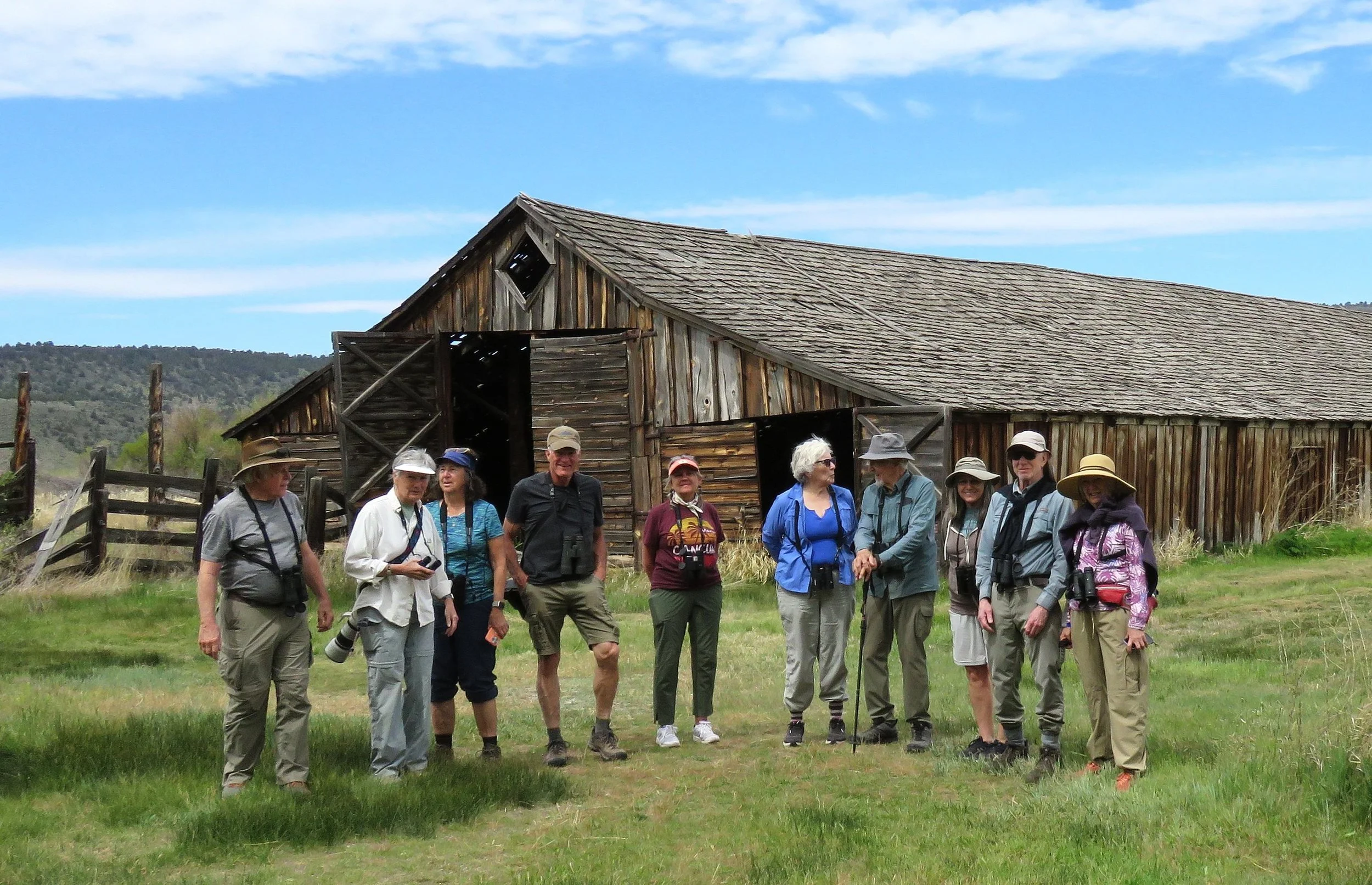
The second day we birded the south end of the refuge starting at the Page Springs Campground. Yellow-breasted Chats and Northern Yellow Warblers were out in force. A Canyon Wren was singing in the area and we eventually found him on a nearby cliff face. A hike up the Blitzen River yielded some busy Blue-gray Gnatcatchers and a Lazuli Bunting along with the usual suspects (Brown-headed Cowbirds, Song Sparrows, Red-winged Blackbirds).
A short drive to the P Ranch homestead was not overly productive but did yield a few new species like House Wren and Sandhill Crane. We could hear Sandhill Cranes almost everywhere we went but they weren’t easy to spot most of the time. We did find a Bald Eagle at this location.
Another drive on the Central Patrol Road heading north turned up some fun birds like Black Terns, Long-billed Dowitchers, Willets, a Short-eared Owl, Trumpeter Swan and our lone Bobolink.
When the dust settled on Friday evening our group had a cumulative total of 117 species sighted. Mark L. gets credit for much of that list as he had two great days of birding before the main group arrived and he saw several species we weren’t able to find later. That’s birding!
I can’t finish this report without mentioning the great time we had at the Frenchglen Hotel. The staff there was extraordinarily attentive to our desires and needs and were very gracious. The rustic charm of the hotel (shared bathrooms!) and vintage room décor were truly special. The food, served family style, was out of this world good. We even got serenaded by one of the servers who came out on the screened porch, while we were enjoying a before dinner cold beverage, and played his accordion and sang. It was a special moment – just one of many on this trip. I think we all came away with closer friendships and a wonderful palette of shared experiences.
Coeur d’Alene Audubon – 2026 Malheur National Wildlife Refuge Field Trip Species List
(Alphabetical order)
American Avocet
American Bittern
American Coot
American Crow
American Goldfinch
American Kestrel
American Robin
American White Pelican
Bald Eagle
Barn Swallow
Belted Kingfisher
Bewick’s Wren
Black-billed Magpie
Black-chinned Hummingbird
Black-crowned Night Heron
Black-headed Grosbeak
Black-necked Stilt
Black Tern
Black-throated Gray Warbler
Blue-gray Gnatcatcher
Blue-winged Teal
Brewer’s Blackbird
Brewer’s Sparrow
Brown-headed Cowbird
Bobolink
Bufflehead
Bullock’s Oriole
Burrowing Owl
Bushtit
California Quail
Canada Goose
Canvasback
Canyon Wren
Cassin’s Vireo
Chipping Sparrow
Chukar
Cinnamon Teal
Clark’s Grebe
Cliff Swallow
Common Raven
Common Yellowthroat
Cooper’s Hawk
Dark-eyed Junco
Double-crested Cormorant
Eared Grebe
Eurasian Collared-Dove
European Starling
Ferruginous Hawk
Forster’s Tern
Franklin’s Gull
Gadwall
Great Blue Heron
Great Egret
Great Horned Owl
Green-winged Teal
House Finch
House Sparrow
Killdeer
Lazuli Bunting
Lesser Goldfinch
Lesser Scaup
Lewis’s Woodpecker
Loggerhead Shrike
Long-billed Curlew
Long-billed Dowitcher
Mallard
Mountain Bluebird
Mourning Dove
Northern Flicker
Northern Harrier
Northern House Wren
Northern Pintail
Northern Rough-winged Swallow
Northern Shoveler
Northern Yellow Warbler
Orange-crowned Warbler
Osprey
Pied-billed Grebe
Red-breasted Nuthatch
Redhead
Red-naped Sapsucker
Red-tailed Hawk
Red-winged Blackbird
Ring-billed Gull
Ring-necked Duck
Ring-necked Pheasant
Rock Wren
Ruby-crowned Kinglet
Ruddy Duck
Sage Thrasher
Sandhill Crane
Savannah Sparrow
Say’s Phoebe
Short-eared Owl
Song Sparrow
Sora
Swainson’s Hawk
Townsend’s Warbler
Tree Swallow
Trumpeter Swan
Turkey Vulture
Violet-green Swallow
Western Grebe
Western Kingbird
Western Meadowlark
Western Tanager
Western Warbling Vireo
Western Wood-Pewee
White-crowned Sparrow
White-faced Ibis
Willet
Wilson’s Phalarope
Wilson’s Snipe
Wilson’s Warbler
Yellow-breasted Chat
Yellow-headed Blackbird
Yellow-rumped Warbler